



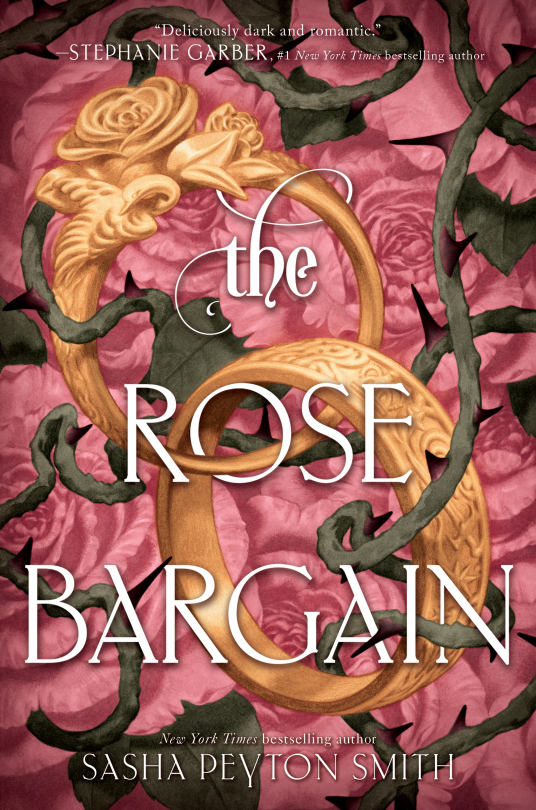
The Rose Bargain
King Edward's face was streaked with mud and blood the moment the woman emerged from the tree line. His sword hung limp at his side. For a single moment, he paused, and then he fell to his knees.
There had been rumors of the Others' involvement in the war from the instant a sword plunged through the belly of a banner knight from the Midlands, but denial is easy to swallow. Surely there were plausible explanations for the sudden shifts in weather, or the flocks of sheep found skinned and headless. But those whose grandmothers had taught them never to enter the woods without a sprig of holly in their pocket knew. They had known for months, for decades, for generations.
Much like the gods who meddled in mortal affairs during the Trojan War, the Others treated human conflicts as amusement.
That was what they were called back then. The Others.
Both the Lancasters and the Yorks believed themselves the legitimate successors to the Plantagenet line. But a country cannot have two kings, and as neither side was willing to concede the throne, banners were raised and blades were sharpened.
The war was brutal, as all wars are—pointless and cruel. Within the first year, the soil of England ran wet with blood. Yet the war did not end. Like the beat of drums leading farmers to slaughter, it marched on.
It wasn't until the Battle of Barnet that the tide truly turned. Every schoolchild on the island knows the story. It is carved into marble stones outside Buckingham Palace, set upright for all to read. The story of the day Queen Moryen saved all of England.
It went like this.
The battlefield was burning, and Edward was desperate.
Whether it was the scent of desperation or blood that summoned her remains a matter of debate, but what matters is that she came.
They say the entire battlefield went still as she strode out into the fray. Her bone-white gown trailed behind her like gauze, catching leaves and pulling them in her wake. She had onyx hair and eyes even blacker than that. Her skin was ghostly pale, her features sharp and so beautiful that looking at her felt like a physical blow. Some men bent over and retched, unable to bear the sight of her.
She walked across the battlefield in slippers, moving slowly, as if she knew they would all wait for her.
Edward dropped to his knees before her.
"Stand," she commanded, and he did. "I come to help."
Tears cut tracks through the dirt on his face as he nodded in wordless, profound gratitude.
She leaned toward him, her perfect profile silhouetted against the ashy smoke of the battlefield, and whispered into his ear.
The conversation was brief; whatever she offered, he readily agreed. Then she pulled a dagger from her belt and slashed his palm. The bargain was made.
Across the clearing, Henry VI dropped dead.
Britain had a new king. The matter was settled. Edward IV.
The Lancasters retreated, and torches burned all night in the York camp as victory celebrations raged.
But the strange woman did not watch them. She was already on the road, seated in a carriage pulled by snow-white horses. With a coronation to plan, there was no time to waste.
Twenty-four hours and one minute later, Edward IV was dead as well. He closed his eyes and fell to the ground as though a string had been cut.
She had promised Edward he would be king, but she had never specified for how long.
And so Queen Moryen of the Others took the throne at Eltham Palace, a serene smile on her face, a crown on her head.
All who raised a hand or sword against her found themselves suddenly unable to move, as if the act itself were forbidden.
The war was over. Britain had a new queen. Immortal. Uncrossable. Inevitable.
Now